Why Standing-Seam Barndominium & Cabin Roofs Are Built for Solar
When building on rural acreage more than 1,000 feet from the nearest utility transformer, electric utility line extension fees frequently run $25 to $50 per linear foot—meaning a quarter-mile trench or pole run can easily cost $35,000 to $65,000 before you consume a single kilowatt-hour.
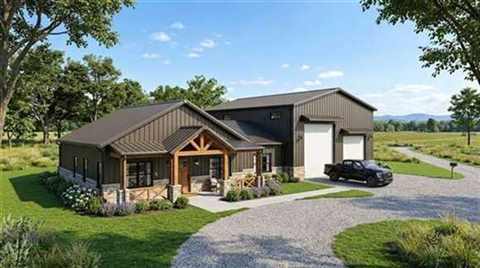
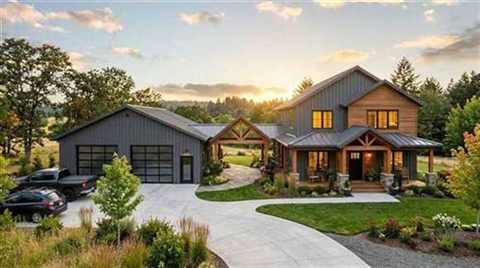
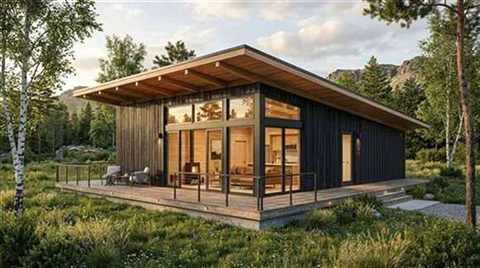
Uninterrupted rectangular gable and monopitch roofs on barndominiums and modern cabins—such as our 30' × 40' footprint (1,200 sq ft) or 40' × 60' shop house (2,400 sq ft)—provide 650 to 1,300+ sq ft of south- or southwest-facing roof plane with zero valleys or dormers. See also our 30x40 barndominium and pole barn floor plans and modern monopitch cabin plans for unobstructed solar roof profiles.
Off-Grid Barndominium Solar & Battery Sizing Guide — Side-by-Side Visual Comparison
Source: NREL PVWatts Winter Solar Irradiance & HoolieHaus 2026 Off-Grid System Sizer.
Step 1: Slashing Daily Kilowatt-Hour Consumption with Closed-Cell Foam & Inverter Heat Pumps
Before sizing solar panels or batteries, the highest-return investment in any off-grid or grid-independent home is reducing thermal HVAC load. A poorly insulated 1,200 sq ft home with electric resistance heat can draw 45 to 65 kWh per winter day. By air-sealing the shell with closed-cell spray foam (R-21 walls / R-49 roof) and installing a 22+ SEER2 cold-climate inverter mini-split heat pump plus a hybrid heat-pump water heater, daily baseline electricity drops to 16 to 24 kWh/day.
2026 Off-Grid & Hybrid Solar + 48V LiFePO4 Battery Sizing by Home Footprint
| Home Size & Style | Daily Load (kWh/Day) | Recommended PV Array | 3-Day LiFePO4 Battery Bank | Est. Equipment Cost (Before 30% ITC) |
|---|---|---|---|---|
| 400–600 sq ft Off-Grid Cabin / ADU | 8 – 12 kWh/day | 4.8 kW (12 × 400W Panels) | 15.3 kWh (3 × 5.12kWh 48V) | $8,400 – $11,800 |
| 1,200 sq ft 30x40 Barndo / Cabin | 18 – 24 kWh/day | 8.8 kW (22 × 400W Panels) | 30.7 kWh (6 × 5.12kWh 48V) | $15,200 – $21,500 |
| 2,400 sq ft 40x60 All-Electric Home | 32 – 42 kWh/day | 14.4 kW (36 × 400W Panels) | 46.0 kWh (9 × 5.12kWh 48V) | $24,800 – $34,200 |
Source: NREL PVWatts Winter Solar Irradiance & HoolieHaus 2026 Off-Grid System Sizer.
Step 2: Sizing the Solar PV Array (kW) and Roof Area Required
Modern 400W to 450W residential monocrystalline solar panels measure roughly 18 to 21 sq ft each (~20 watts per sq ft). On a 30x40 barndominium with a 4:12 gable roof, a single 40-foot south-facing roof plane offers ~660 sq ft of unobstructed area—enough to mount 24 to 28 panels (a 10 kW to 12.5 kW solar array) while maintaining code-required 36-inch fire-access perimeter pathways.
In most US regions averaging 4.5 peak sun hours per day, a 10 kW solar array generates 36 to 45 kWh per day—nearly double the daily consumption of a well-insulated 1,200 to 1,800 sq ft barndominium (such as a 30x50 layout), allowing rapid afternoon recharging after cloudy days.
Room-by-Room Mini-Split & Heat Pump BTU Zoning Calculator
Calculate exact heating and cooling BTU loads, condenser tonnage, and room-by-room ductless mini-split air handler head sizes based on IECC climate zone, ceiling height, and spray foam vs. fiberglass insulation.
Step 3: Sizing a 48V LiFePO4 Battery Bank for 2 to 3 Days of Autonomy
Server-rack 48V Lithium Iron Phosphate (LiFePO4) batteries rated for 6,000+ cycles have transformed off-grid economics, now costing roughly $240 to $320 per kWh of storage. For a home consuming 20 kWh per day, a 30 kWh to 45 kWh LiFePO4 battery bank (six to nine 5.12 kWh server-rack modules) paired with dual 12 kW split-phase hybrid inverters provides 48+ hours of silent autonomy plus automatic propane/diesel generator start for multi-day winter storms.