1. U.S. Census & NAHB Custom-Home Financing Benchmarks: 17.5%–20% of Single-Family Starts
According to U.S. Census Bureau Survey of Construction (SOC) and NAHB housing-start records, custom contractor-built and owner-built single-family residences account for 17.5% to 20% of all U.S. single-family starts nationally—and exceed 40% in non-metro and rural counties where Barndominium, Pole Barn Home, and Shop House construction thrives. Unlike buying an existing tract home with a standard 30-year mortgage, financing new rural construction requires a short-term construction loan (typically 9 to 12 months of interest-only payments on drawn funds) that converts into permanent financing upon Certificate of Occupancy.
For borrowers building on 30x40, 30x50, or 40x60 footprints, lender guidelines center on three underwriting pillars: acceptable structural comps (post-frame, red-iron steel, or stick-built on a permanent foundation), realistic cost-to-complete budgets, and an attached garage or workshop ratio that still appraises as a primary single-family residence rather than an agricultural warehouse.
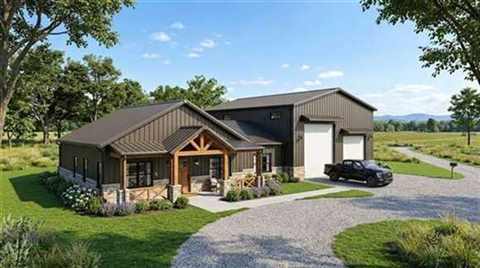
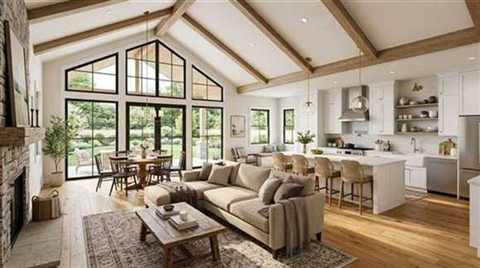
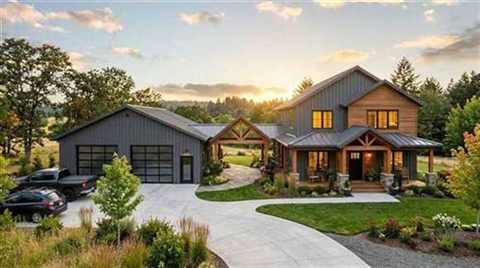
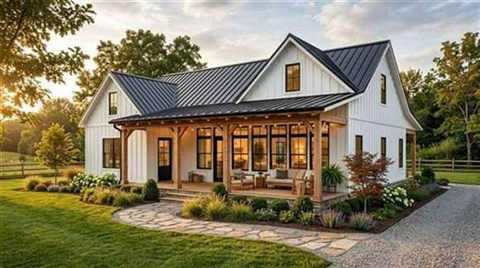
Barndominium & Owner-Builder Loan Statistics (2026) — Side-by-Side Visual Comparison
Source: Fannie Mae, USDA Rural Development, Farm Credit & HoolieHaus 2026 Construction Finance Study.
2. One-Time-Close vs. Farm Credit vs. Two-Time-Close Loans: Down Payments & Credit Rules
In 2026, rural home builders primarily choose between five construction loan structures. Farm Credit and AgCredit lenders remain the most barndominium-friendly institutions nationwide, typically requiring a 680+ credit score and 15% to 20% down while explicitly underwriting laminated post-frame and red-iron steel shells—and occasionally approving experienced owner-builders. Conventional Fannie Mae and Freddie Mac One-Time-Close construction-to-permanent loans offer 10% to 20% down (680–700+ credit) with a single set of closing costs, provided a licensed general contractor manages the build and the structure sits on a permanent concrete foundation.
Eligible military veterans can leverage VA One-Time-Close construction loans for 0% down with no monthly mortgage insurance, while USDA and FHA One-Time-Close programs offer 0% to 3.5% down for qualifying rural parcels and credit scores starting around 620–640, though both require an approved turnkey builder and strong local closed comparable sales. Local community banks offering two-time-close loans (20%–25% down) often provide the widest flexibility for unique rural layouts or owner-builders carrying a 15% contingency reserve.
2026 Barndominium & Custom Home Construction-to-Permanent Loan Options Compared
| Loan Program | Min. Credit Score | Min. Down Payment (Or Land Equity) | Post-Frame / Steel Allowed? | Owner-Builder Allowed? | Typical Draw Schedule |
|---|---|---|---|---|---|
| Farm Credit / AgCredit Rural Home Loan | 680+ | 15% – 20% | Yes (Post-Frame & Steel) | Case-by-Case (With Experience) | 5 Draws (Interest-Only During Build) |
| Conventional One-Time-Close (Fannie/Freddie) | 680 – 700+ | 10% – 20% | Yes (Requires Permanent Foundation) | No (Licensed GC Required) | 4 – 5 Draws (Auto-Converts to 30-Yr) |
| FHA / USDA One-Time-Close Construction | 620 – 640+ | 0% (USDA) / 3.5% (FHA) | Yes (Stick/Modular/Steel w/ Comps) | No (Approved Builder Only) | 4 – 5 Inspector Draws |
| VA One-Time-Close Construction Loan | 620 – 660+ | 0% Down (Eligible Veterans) | Yes (Must Meet VA MPRs) | No (VA-Registered Builder) | 5 Draws (Zero Interest During Build Option) |
| Local Community Bank Two-Time-Close | 680+ | 20% – 25% | Yes (Most Flexible on Comps) | Often Yes (With 15% Contingency) | Monthly % of Completion Draws |
Source: Fannie Mae, USDA Rural Development, Farm Credit & HoolieHaus 2026 Construction Finance Study.
3. The 100% Land-Equity Rule: Turning Paid-Off Acreage Into Your Construction Down Payment
One of the most overlooked advantages in Fannie Mae Single-Closing Construction-to-Permanent and Farm Credit guidelines is the 100% land-equity credit. If you purchase rural acreage ahead of time—or pay down your land loan before breaking ground—lenders credit 100% of your verified land equity toward the required 15% to 20% project down payment on the combined land-plus-construction appraised value.
For example, on a $400,000 total project ($80,000 owned land free-and-clear + $320,000 turnkey build contract for a 2,000 Sq. Ft. Barndominium with Shop), your $80,000 land equity already equals 20% of the total package—frequently eliminating cash down-payment requirements at closing aside from lender reserves and closing fees. Compare turnkey vs. shell costs across framing systems first using our Barndominium vs. Stick-Frame Cost Comparator before submitting contractor bids to your loan officer.
Barndominium Steel Shell vs. Post-Frame vs. Stick-Frame Cost Comparator
Compare side-by-side dried-in shell, slab foundation, and turnkey finish costs across Red-Iron/Cold-Formed Steel Barndominiums, Laminated Post-Frame (Pole Barn) Homes, and 2×6 Stick-Framed Houses.
4. Passing Secondary-Market Appraisals: The <=50% Shop Ratio & Permanent Foundation Rule
The #1 underwriting bottleneck for barndominium and shouse loans is not credit score—it is appraisal comparability. To qualify for conventional Fannie Mae, Freddie Mac, or Farm Credit secondary-market sale, appraisers must confirm that the property's highest and best use is residential, not commercial or agricultural. Under 2026 rural underwriting benchmarks, keeping the unheated workshop or garage bay at or below 50% of the total under-roof footprint prevents commercial-use value deductions and keeps living-area comps valid.
For instance, inside a 40x60 (2,400 sq ft) envelope, pairing 1,400 to 1,600 sq ft of finished living quarters with an 800 to 1,000 sq ft shop bay maintains a residential-dominant ratio (33% to 42% shop). Equally critical: post-frame columns must rest on engineered permanent foundations (such as concrete Perma-Columns or poured frost piers/monolithic slabs) rather than untreated pole-in-dirt agricultural posts, and interior finishes must match residential IRC standards.
5. How the 5-Stage Construction Draw Schedule Works (15% / 25% / 25% / 20% / 15%)
Over 85% of Farm Credit, community bank, and one-time-close lenders disburse construction funds in five inspector-verified milestones rather than handing cash upfront. Typical draw allocations follow physical site progress: Draw 1 for Site Prep, Utilities & Foundation/Slab (15%), Draw 2 for Dried-In Structural Shell, Trusses, Roof & Windows (25%), Draw 3 for Plumbing, Electrical & HVAC Rough-Ins (25%), Draw 4 for Insulation, Drywall, Cabinets & Interior Finishes (20%), and Draw 5 for Final Trim, Grading & Certificate of Occupancy (15%).
Because borrowers pay interest only on the cumulative balance drawn at each milestone, shortening the dried-in phase with a pre-engineered post-frame or steel shell (typically 6–9 months total build time versus the 11.7-month U.S. Census average for custom stick-built homes) directly reduces carry interest during construction. Before locking your draw budget, double-check raw-land utility costs in our Rural Land Perc Test, Septic & Well Cost Guide and verify your rough-in milestones with the Owner-Builder Inspection Checklist.
6. Compare Framing & Shell Costs Before Submitting Lender Bids
Ready to prepare your contractor bid package for a Farm Credit or One-Time-Close underwriter? Model steel shell, post-frame, and stick-built budgets side-by-side inside our Barndominium Steel Shell vs. Post-Frame vs. Stick-Frame Cost Comparator and pair your budget with downloadable 2D CAD floor plans.